꒰ Root of Circle of Care ꒱
↳ Problem area: Elderly, low-income, marginalized patients in Vietnam face complex & fragmented processes in accessing healthcare resources and services.
↳ Impact: Patients either delay or completely abandon treatment due to bureaucratic and technological barriers, which are taxing on their physical and emotional well-being. This further exacerbates their willingness to seek out assistance.
「 ★ Solution: Designing printed artifacts for more accessible and efficient experiences in healthcare services and facilities」
✎____________
꒰ "Systems are moving forward with the presence of digitization no matter how far behind vulnerable users are." ꒱
Vietnam's aging population is growing faster than its healthcare infrastructure can support. Elderly patients must arrive as early as 2 AM to secure a queue number, manage stacks of bureaucratic paperwork, and navigate hours of waiting — largely unassisted. Overworked staff have little capacity to guide them, corruption deters engagement, and for patients who are simultaneously elderly, impoverished, and geographically isolated, every step of the process is a barrier stacked on another barrier.
This dynamic illuminates 3 socioeconomic themes that put this project in motion:
1. Rapidly aging population in Vietnam
2. Large income & technological competency gap widens the access barrier
3. Increasing digitization of healthcare services & bureaucratic processes
꒰ This project posits: what if design could make that invisible weight visible and give people the tools to carry it differently? ꒱
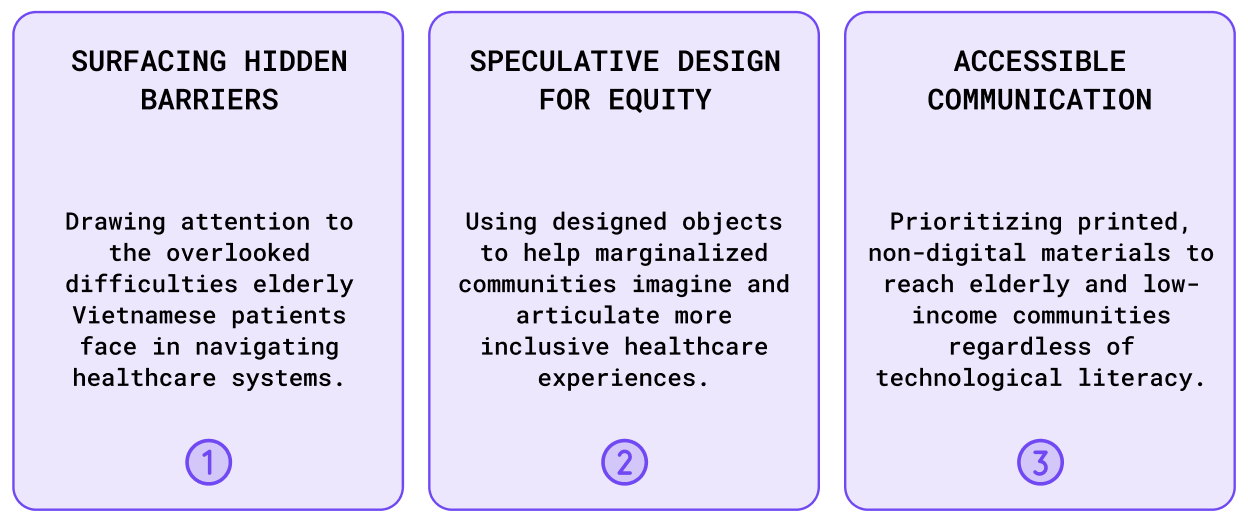
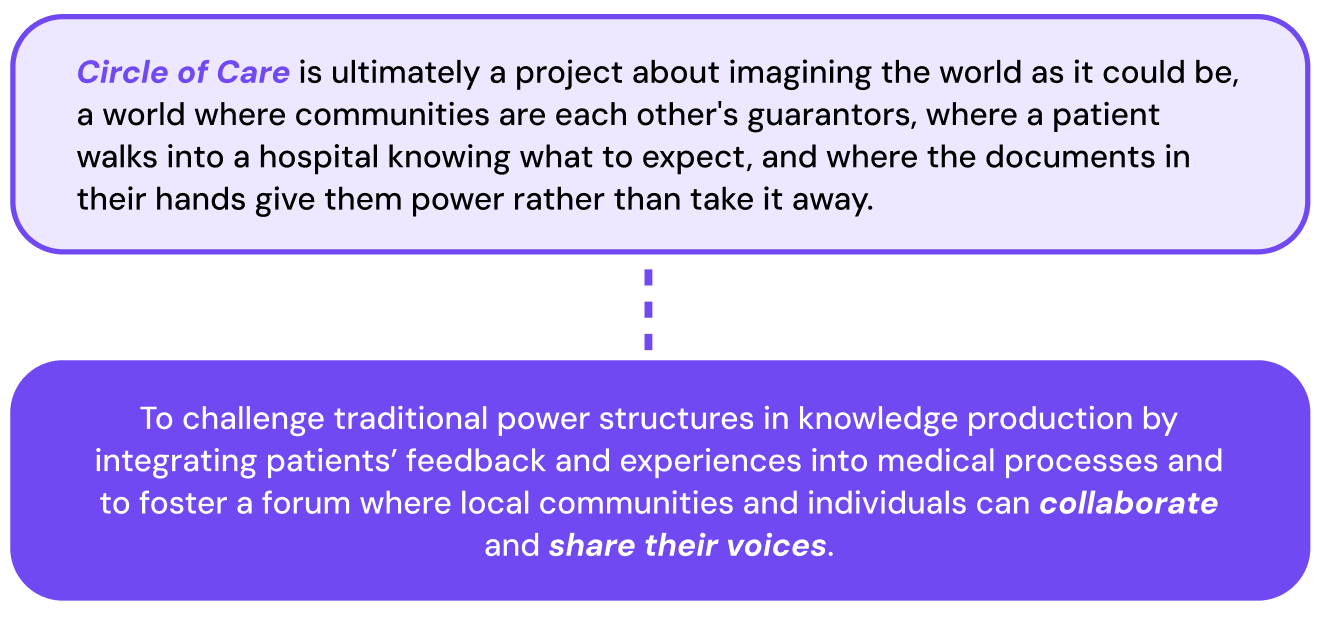
✦ The overarching goal for this project is to redirect people’s attention to unaddressed difficulties that many elderly patients in Vietnam are facing in their lived experiences in general, and in seeking effective and affordable healthcare services in particular, through the inspection and repositioning of everyday objects and familiar avenues of daily activities by creating a series of documents and artifacts that outline the experience of elderly patients seeking medical care and assistance.
✎____________
꒰ Zooming in closer... ꒱
The project was grounded in rigorous, multi-layered research.
1. STEEP analysis mapped the systemic forces shaping healthcare access, revealing deep technological barriers and a near-total absence of sustained institutional support for low-income elderly users
2. Worldbuilding analysis of Katsuhiro Otomo's Cannon Fodder and the Vietnamese novel Impasse surfaced powerful thematic parallels in enforced limitation & survival under oppression
3. Informal interview with my grandfather in Ho Chi Minh City in which he shared about his monthly hospital visits (the documents he carries, the hours he waits, the health record booklet that holds decades of his medical history
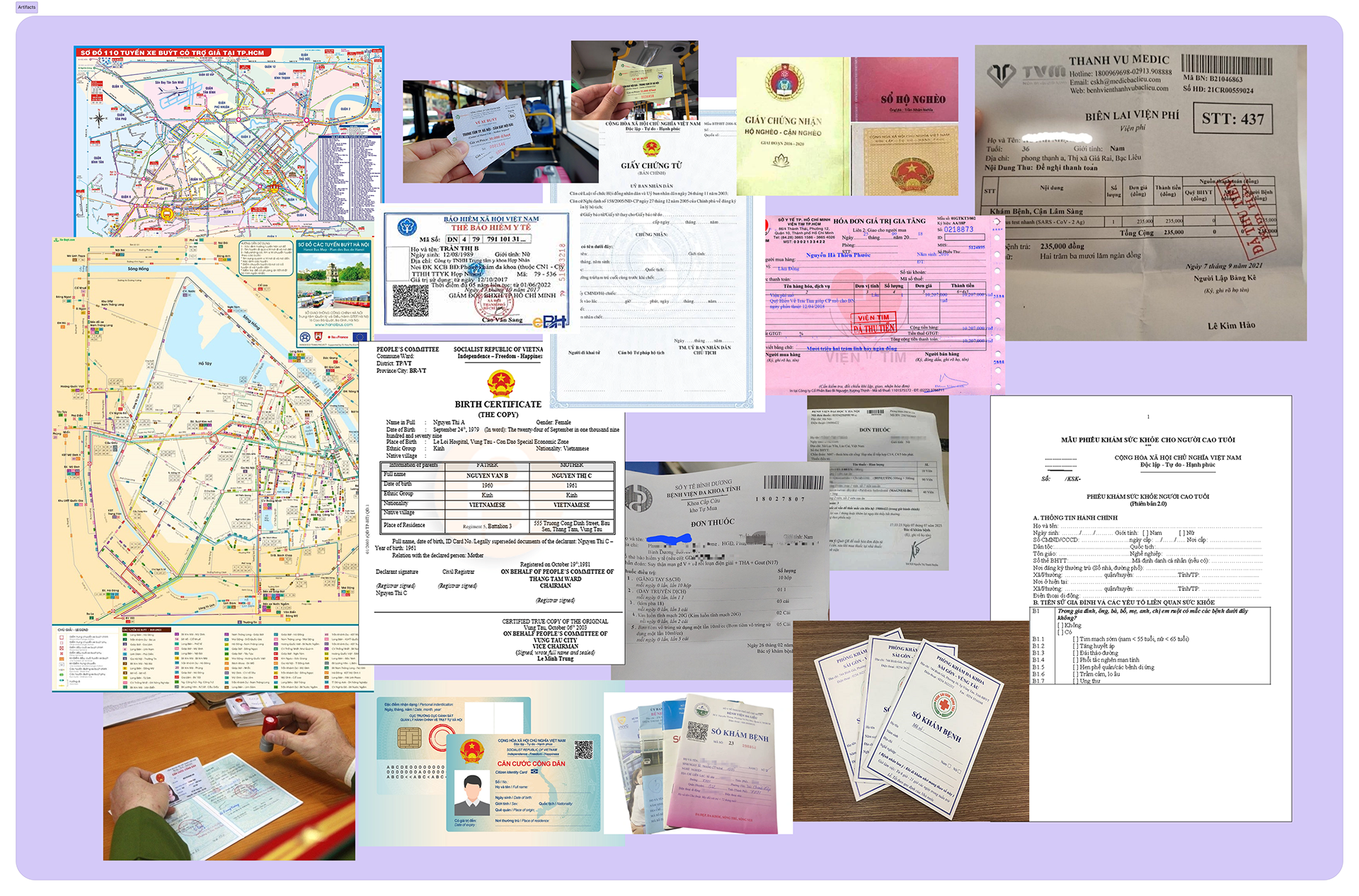
Compilation of documents connected to the healthcare accessing process in Vietnam.
✎____________
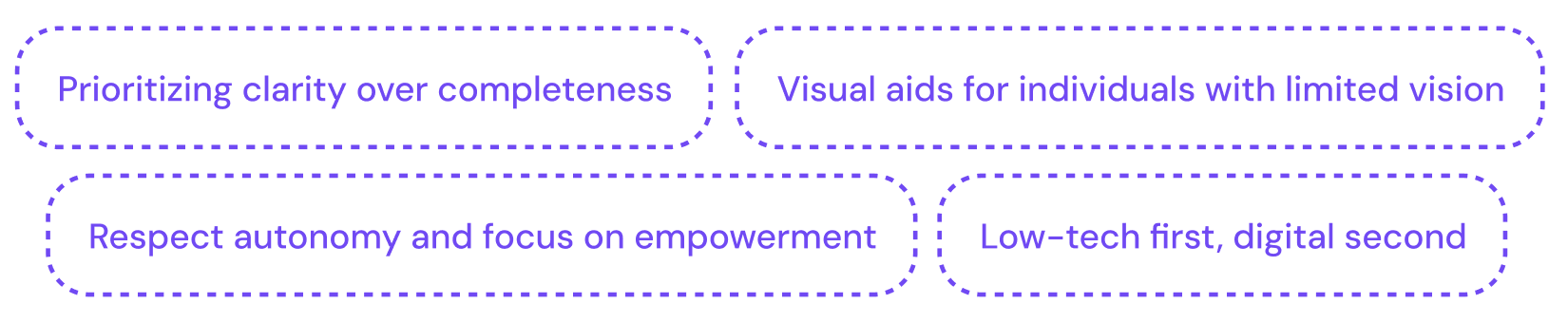
꒰ The anchoring features ꒱
✎____________
꒰ & now cue the visuals! ꒱
Building upon the design directions, I used the transcript from the informal interview I had with my grandpa as a guide to create a journey map of a patient health check-up process.
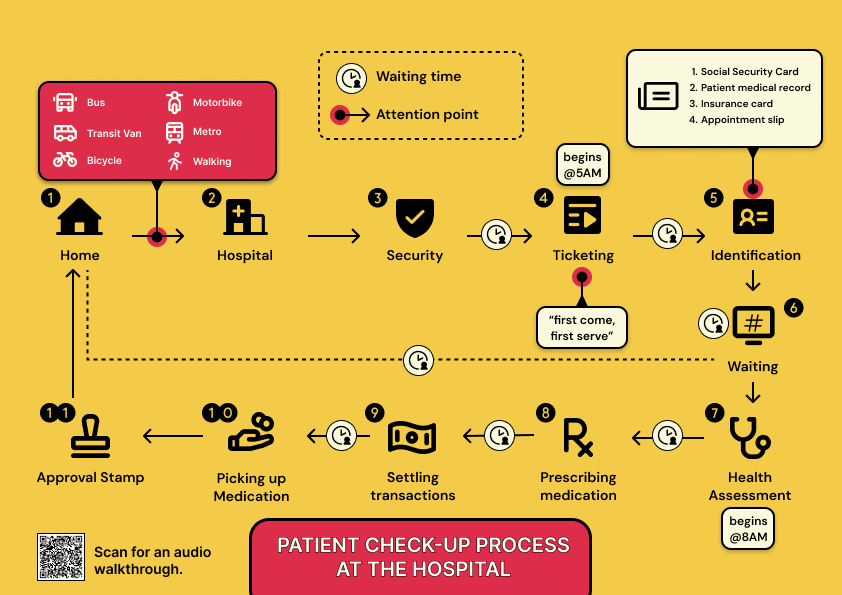
Patient Journey Map
Scan for audio guide
This artifact portrays an 11-step visual map of the hospital check-up process that marks every friction point in red. Bold iconography and minimal text make it readable across literacy levels, while an audio walkthrough accessible via QR code ensures no one is left behind.
At its core, the map is a tool for turning an overwhelming institutional experience into something a patient can anticipate, understand, and navigate on their own terms.
✎____________
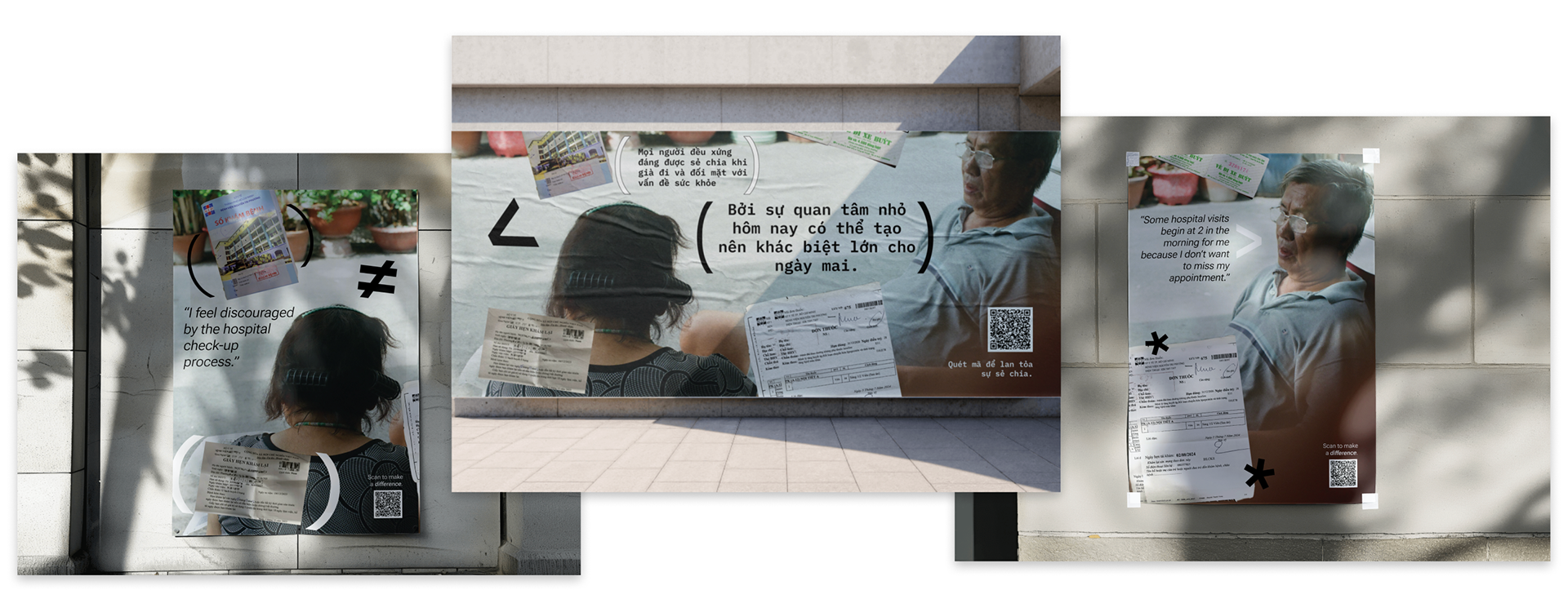
Mockup Posters for Circle of Care Campaign
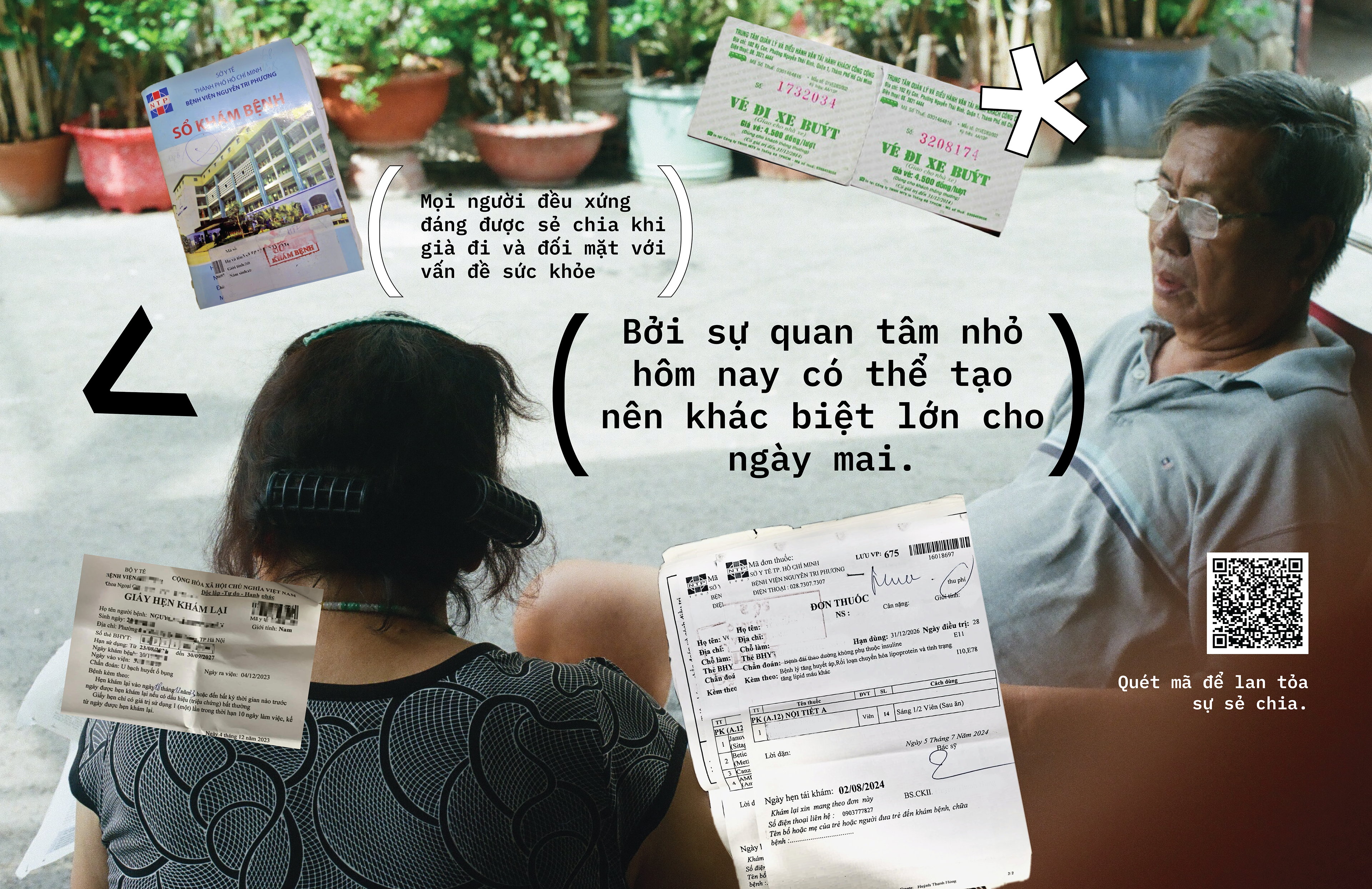
The posters are the project's street-level invitation. First-person quotes from real elderly patients are layered over documentary photography and real medical documents, making visible the bureaucratic weight that is otherwise easy to overlook.
A "Scan to make a difference" QR code turns passive recognition into active engagement, drawing viewers into Circle of Care's world.
✎____________
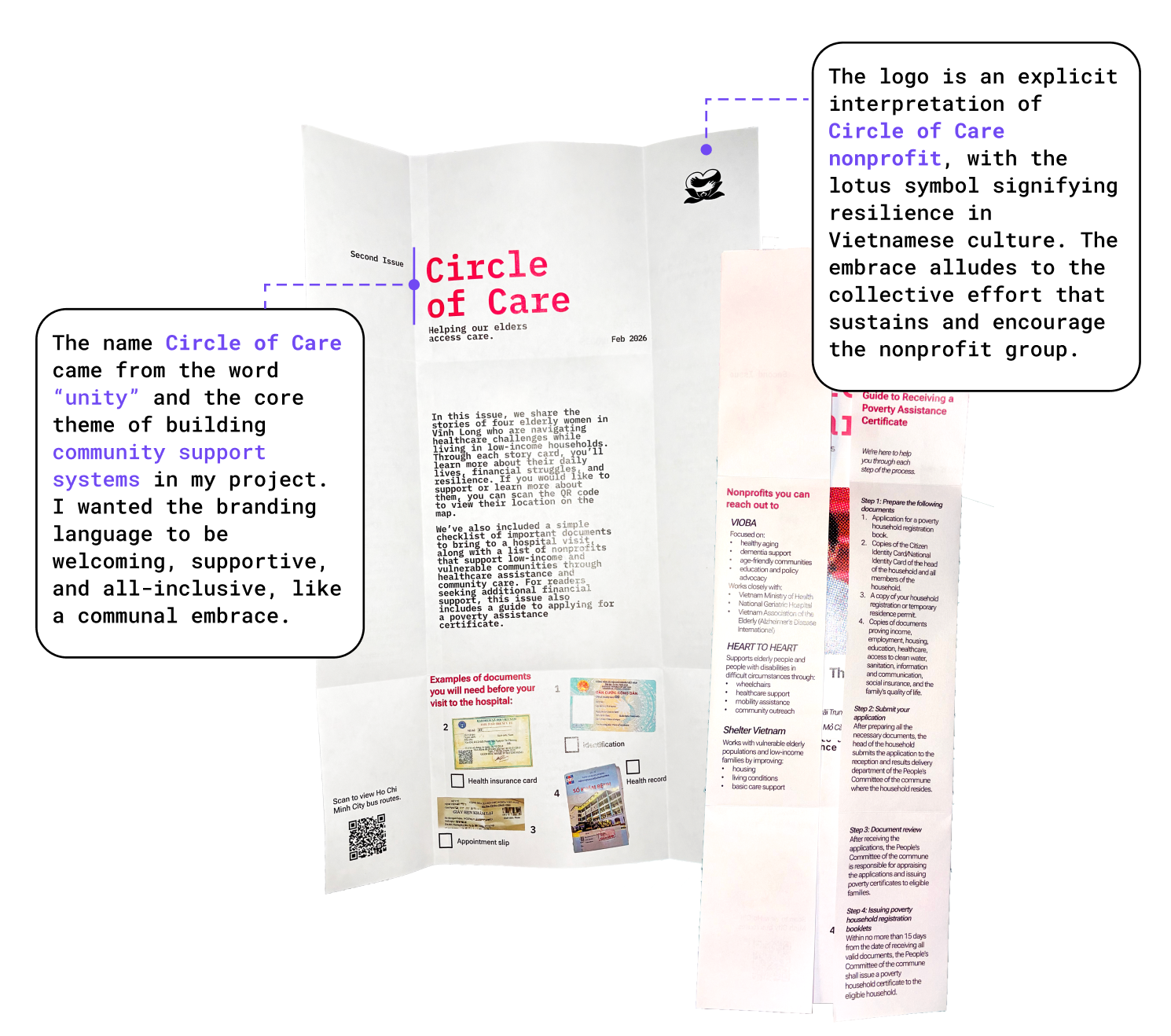
Inspired directly by my grandpa's health record booklet, the newsletter pack is designed as its counterfactual opposite: a document that gives power back rather than holding it over patients. Distributed monthly by Circle of Care, it contains a hospital document checklist, a nonprofit resource directory, a step-by-step poverty assistance guide, and story cards.
The name Circle of Care comes from the word "unity," and the lotus logo speaks to resilience — a quiet but deliberate act of cultural grounding.
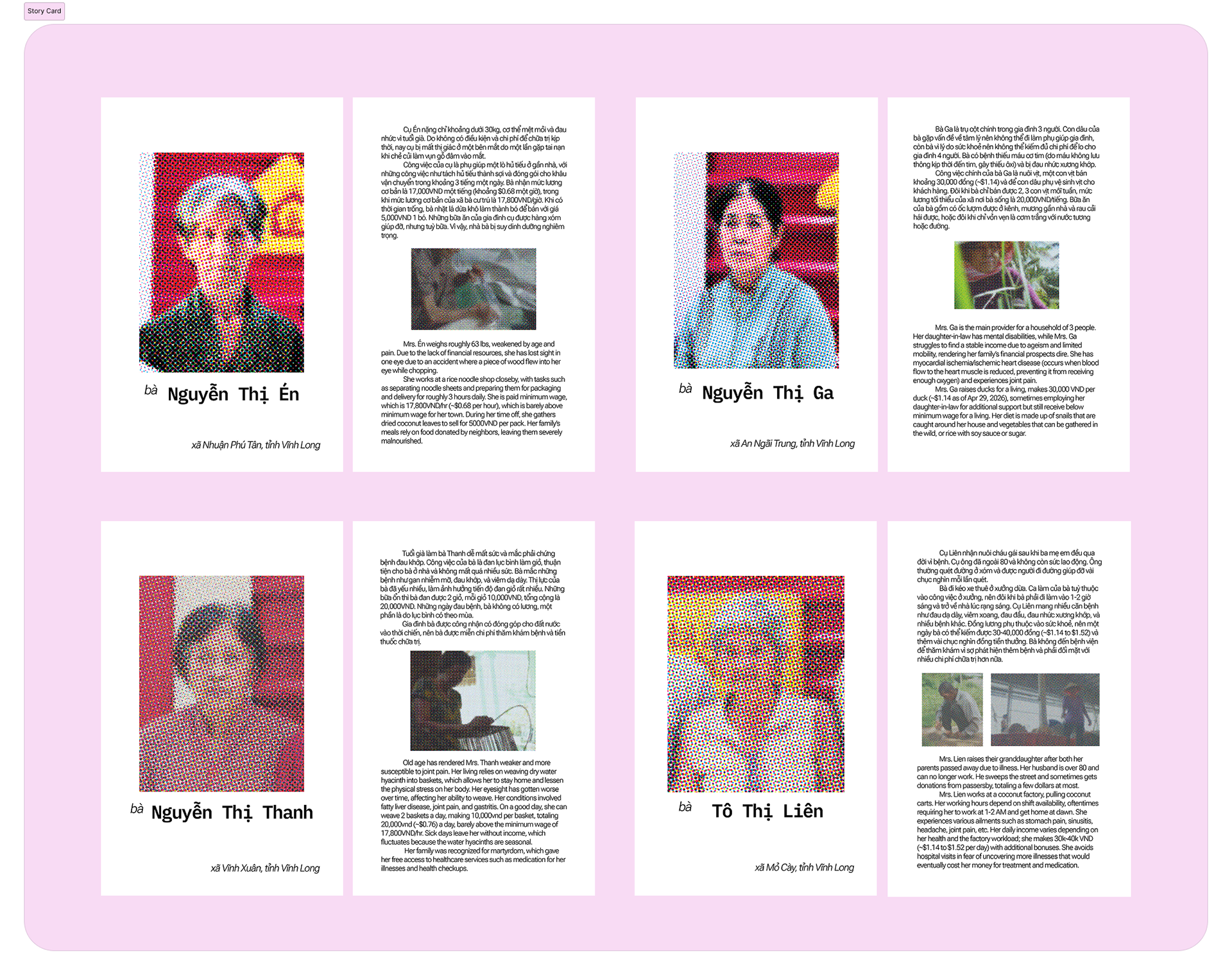
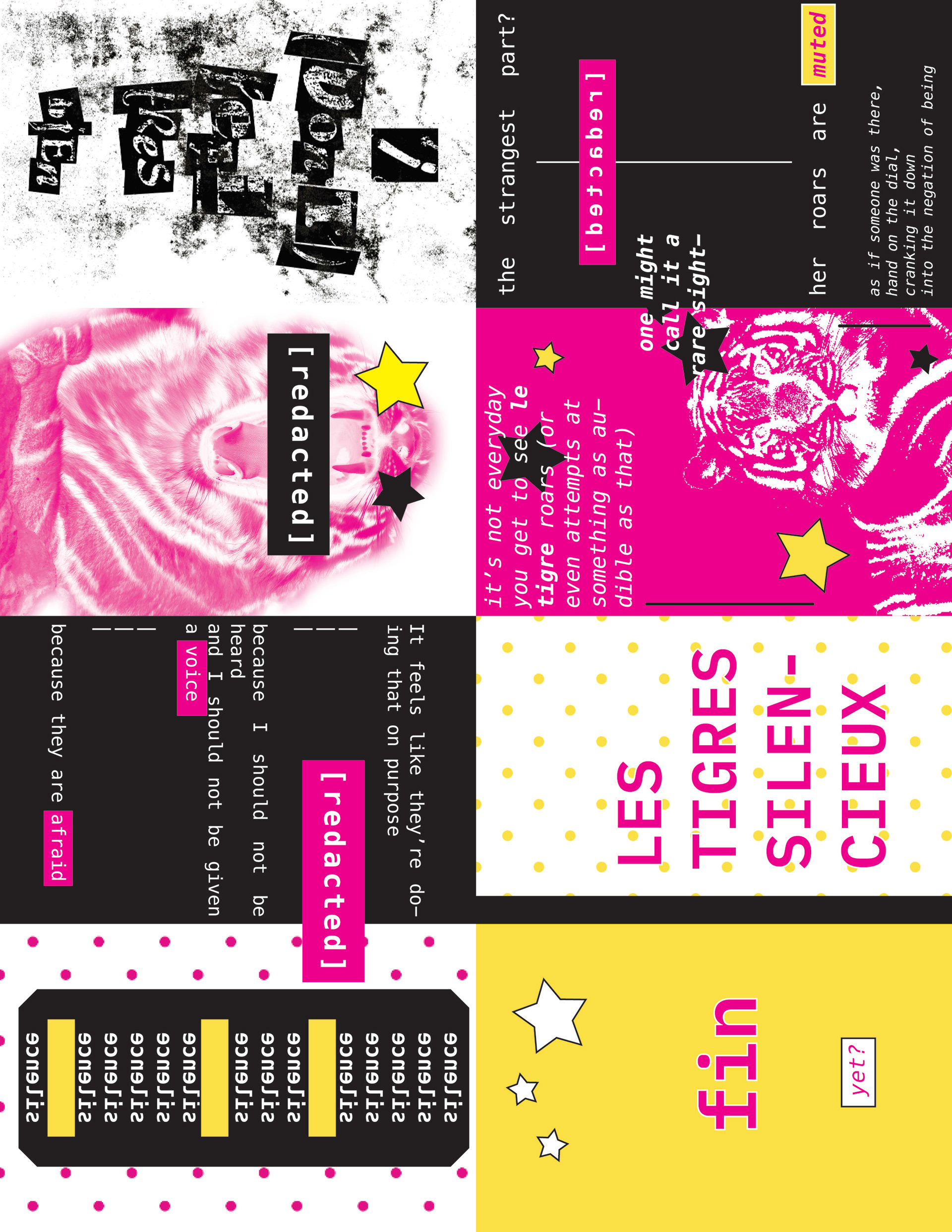
The story cards feature four real elderly women from rural Vietnam, sourced from the charity show Mai Am Gia Dinh Viet, documenting their financial struggles, health conditions, and barriers to care. They form the emotional core of the newsletter — proof that behind every statistic is a person whose story deserves to be heard.
Alongside them, the Les Tigres Silencieux zine pushes further, using redacted text and non-linear storytelling to confront the intersecting oppressions elderly Vietnamese women carry, and to position readers as agents of change rather than passive observers.
✎____________
꒰ Looking back & thinking further ꒱
✎____________